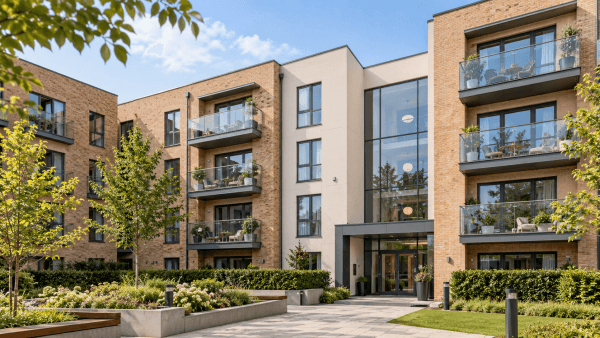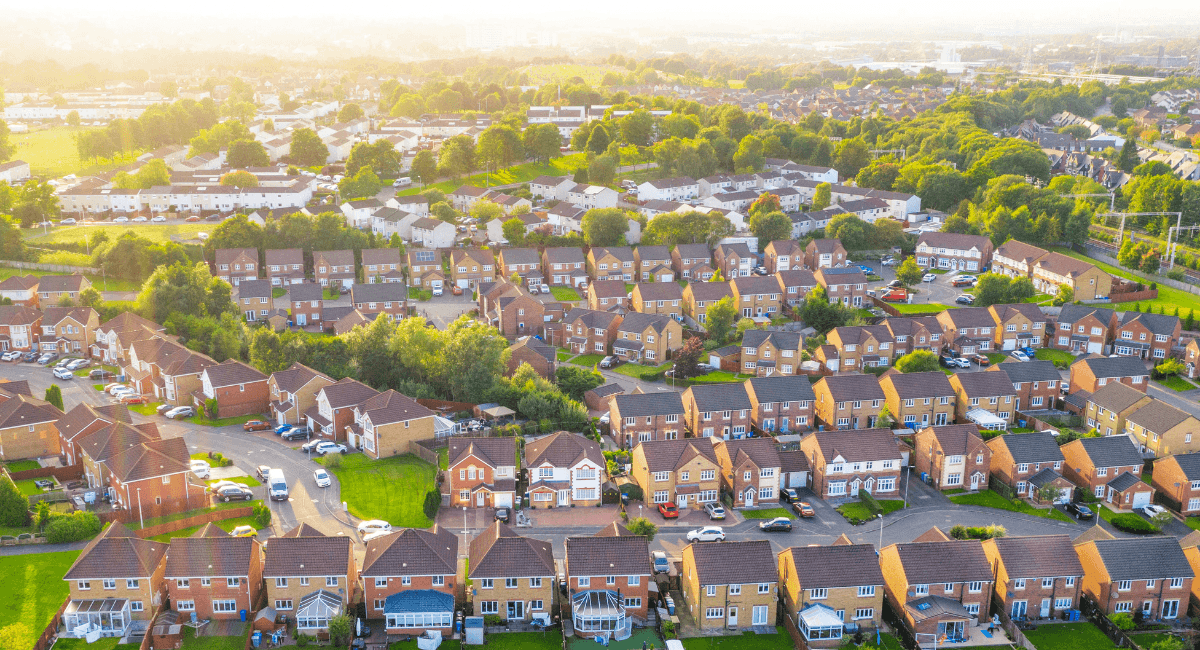
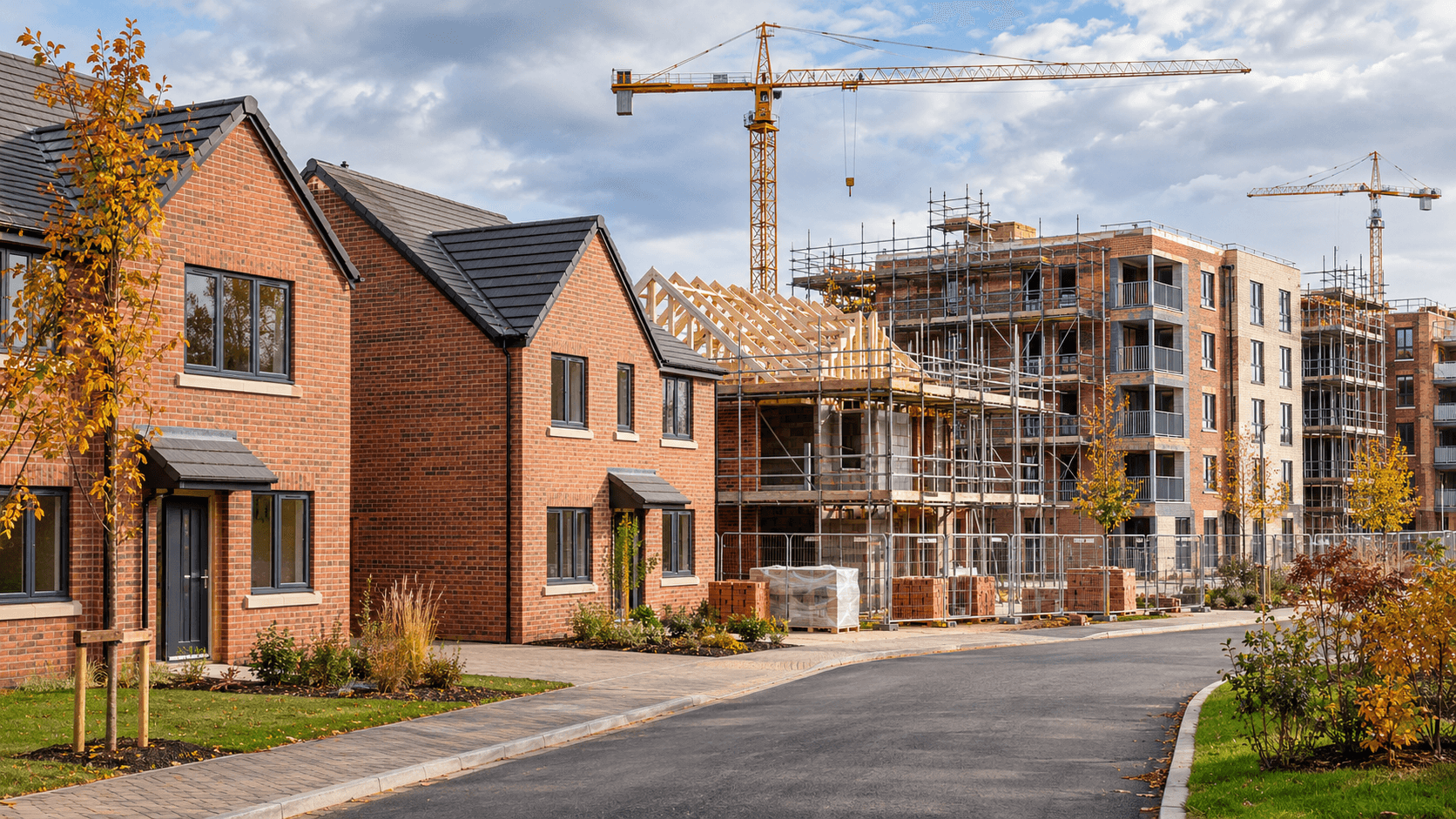
UK new-home registrations fell by 13% year on year in the third quarter of 2026. The latest figures from the National House Building Council (NHBC) show that 26,231 new homes were registered in the quarter, compared with 30,279 in the same period of 2025.
That does not mean 13% fewer homes were completed immediately. NHBC registrations are made before construction and are best understood as an early indicator of future new-build supply. Even so, the figures matter to buyers, sellers and anyone trying to understand where UK house prices could go next.
Why has UK new-home building fallen?
Housebuilding is being affected by a combination of affordability pressure, higher development costs and uncertainty about demand. When mortgage costs remain high, fewer buyers can comfortably afford a new-build home. Developers may then slow the release of new sites or build at a more cautious pace.
Building costs, planning requirements, labour shortages and the cost of land also affect whether a scheme is financially viable. A fall in registrations can therefore reflect both weaker buyer demand and developers being more selective about which projects they start.
The NHBC data also showed differences between sectors. Private-sector registrations fell by 8% year on year, while registrations in the rental and affordable housing sector fell by 23%. The picture is not identical across every region, so national figures should be treated as a useful guide rather than a forecast for every local market.
What could this mean for buyers?
Fewer new homes entering the pipeline could mean less choice in some areas, particularly where housing demand is already strong. Buyers may see more competition for well-priced properties, and popular developments may sell more quickly when attractive plots are released.
There can also be advantages for buyers. A slower market may give you more time to compare specifications, service charges, incentives and build quality. If a developer is offering a contribution towards legal fees, upgrades or a deposit, make sure you understand the full terms and whether the incentive affects the effective price of the property.
First-time buyers should also check which support schemes they may qualify for. Our guide to the Your First Home scheme and its 2.5% deposit explains the main points to consider, but buyers should always confirm the latest eligibility and application information before making financial decisions.
Could fewer new homes push up house prices?
A reduction in future supply can put upward pressure on prices if demand remains stronger than the number of homes available. However, house prices are influenced by several factors, including mortgage rates, wages, consumer confidence, local employment and the number of existing homes being sold.
It is therefore too early to say that a 13% fall in registrations will automatically lead to higher prices. It may support prices in particular local markets, but affordability can limit what buyers are able to pay. A development with fewer available plots may still need to offer incentives if buyers are cautious or mortgage approvals are taking longer.
For wider context, read our update on UK house prices in autumn 2026. It explains why a national average can conceal important differences between regions and property types.
What should sellers do in a changing market?
Sellers of existing homes should not assume that a shortage of new-build supply means they can automatically add a premium to their asking price. Buyers compare condition, location, running costs and value across both new and older properties.
Accurate pricing remains essential. A home that is priced too high can be overlooked while buyers wait to see whether the price changes. Our guide on how to price your house correctly covers local evidence, comparable sales and the importance of reviewing the market response.
Presentation also matters. New-build buyers may be comparing a finished home with a brand-new property that offers modern insulation, warranties and lower initial maintenance. Existing-home sellers can respond by dealing with obvious defects, presenting rooms clearly and making information about improvements and running costs easy to find.
What should buyers check before reserving a new-build home?
- Whether the advertised price includes incentives and exactly what those incentives cover.
- The estimated completion date and what happens if the build is delayed.
- The service charge, estate charge, lease terms and any planned management arrangements.
- The specification, expected energy performance and items that are not included.
- The developer’s warranty, complaints process and aftercare arrangements.
- Whether your mortgage offer remains valid for the expected completion date.
Buyers considering flats should pay particular attention to service charges, lease length and major-works provisions. Our guide to why some flats are harder to sell in 2026 explains why these details can influence both affordability and future resale.
The wider picture for UK housing
The UK needs more homes, but the number of registrations is only one part of the story. Planning approvals, starts, completions, infrastructure and buyer affordability all affect how quickly supply reaches the market. A weaker pipeline today may become a more visible supply constraint in the years ahead, but the effect will vary by location and property type.
For buyers, the practical response is to understand the numbers, check the detail and obtain independent legal and mortgage advice. For sellers, the focus should remain on realistic pricing, strong presentation and a clear explanation of why the property represents good value.
Written by Nick.
Source: National House Building Council, new home registration data. NHBC registrations are an indicator of homes entering the construction pipeline and should not be treated as the same as completed homes.